Modern Machining Technology

Precision at Every Turn

Machining transforms raw materials into precise components through controlled material removal. At CNCForge Institute, we teach the complete spectrum of modern machining operations, from tool selection to quality verification. Understanding machining fundamentals is essential for anyone involved in manufacturing.

Types of CNC Machines and Tooling Systems

3-Axis Milling Centers

The workhorse of modern manufacturing. Three-axis mills move in X, Y, and Z directions, suitable for most prismatic parts. Ideal for prototyping and production runs.

  • Vertical machining centers (VMC)
  • Horizontal machining centers (HMC)
  • Gantry mills for large parts

4-Axis & 5-Axis Systems

Multi-axis machines add rotational capabilities for complex geometries. 4-axis adds rotation around one axis; 5-axis provides full positional freedom.

  • Simultaneous 5-axis machining
  • 3+2 axis positional machining
  • Trunnion and rotary tables

CNC Lathes & Turning Centers

Specialized for cylindrical parts. Modern turning centers include live tooling for milling operations, combining lathe and mill capabilities.

  • 2-axis basic turning
  • Multi-turret configurations
  • Swiss-type lathes for small parts

Cutting Tool Categories

Selecting the right cutting tool is critical for achieving quality, speed, and economy in machining operations.

End Mills

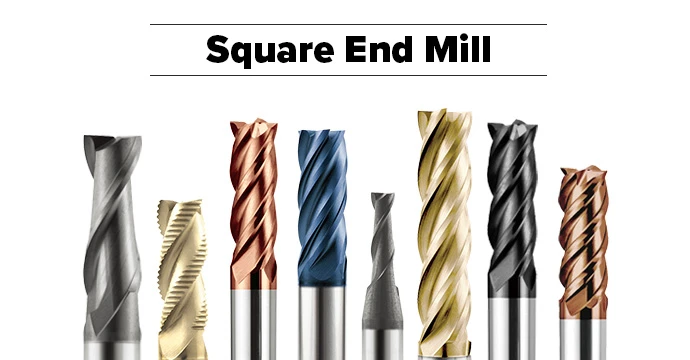
Versatile rotary cutters for milling operations. Available in various geometries for different applications:

  • Square End Mills: General-purpose milling with sharp corners
  • Ball Nose End Mills: Contour milling and 3D surfaces
  • Corner Radius End Mills: Stronger corners, longer tool life
  • Roughing End Mills: High material removal rates
  • High-Helix End Mills: Improved chip evacuation for aluminum
End Mill Types
Face Mills and Inserts
Face Mills & Indexable Inserts

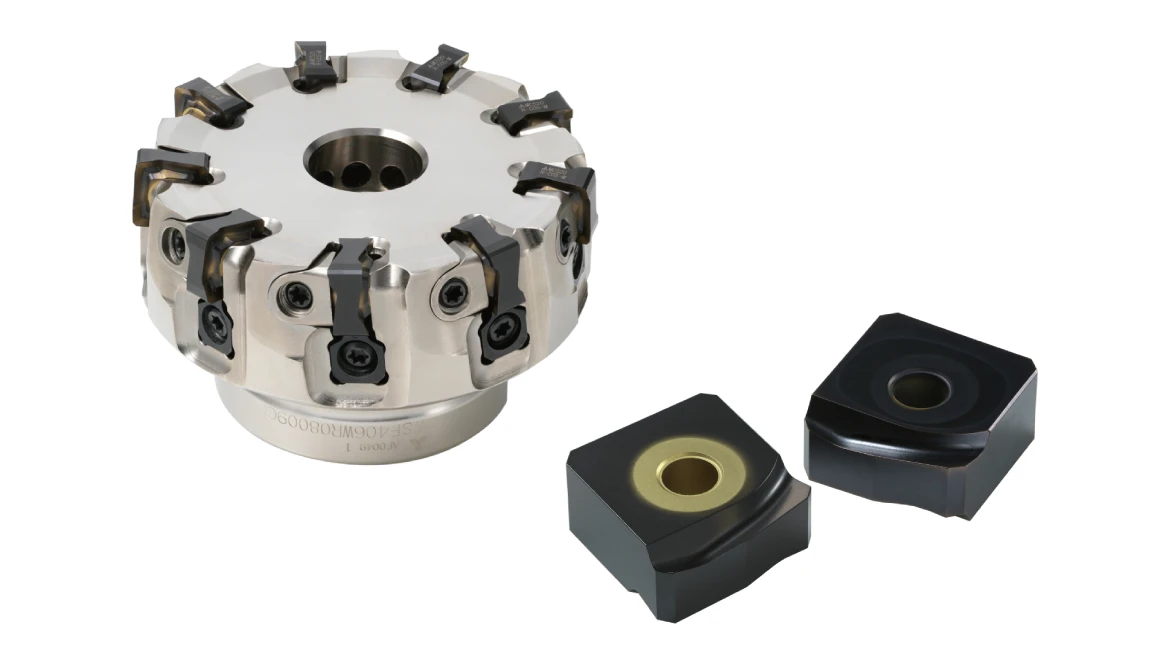
Large diameter cutters with replaceable carbide inserts. Economical for high-volume production:

  • Face Mills: Flat surface machining with excellent productivity
  • Shoulder Mills: 90-degree walls and pockets
  • Insert Grades: Coating options for different materials (TiN, TiCN, TiAlN)
  • Chip Breaker Geometry: Optimized for specific operations

Cost Benefit: While initial investment is higher, indexable tools reduce per-part costs significantly in production environments by allowing quick insert changes without removing the tool holder.

Cooling, Lubrication, and Precision Control

Coolant and Lubrication Strategies

Effective cooling extends tool life, improves surface finish, and enables higher cutting speeds. Different materials and operations require specific cooling approaches:

01
Flood Coolant

Traditional high-volume coolant delivery. Excellent heat dissipation and chip flushing. Requires coolant management systems and regular maintenance.

02
High-Pressure Coolant (HPC)

Delivers coolant at 70-100 bar directly to the cutting edge. Breaks chips and evacuates them from deep holes and pockets. Essential for difficult materials.

03
Minimum Quantity Lubrication (MQL)

Micro-droplets of oil mist provide lubrication with minimal fluid usage. Environmentally friendly and reduces coolant-related costs.

04
Cryogenic Cooling

Liquid nitrogen or CO₂ for extreme cooling. Used for difficult-to-machine materials like titanium and Inconel. Eliminates coolant disposal issues.

Factors Affecting Machining Precision

Achieving micron-level accuracy requires controlling multiple variables throughout the machining process:

Thermal Stability

Temperature changes cause dimensional errors. Machine warm-up, coolant temperature control, and thermal compensation algorithms minimize thermal drift.

Vibration Control

Tool chatter degrades surface finish and dimensional accuracy. Proper tool selection, balanced cutting forces, and rigid workholding prevent vibration.

Machine Geometry

Ball screw backlash, linear guide wear, and spindle runout accumulate into positioning errors. Regular calibration and preventive maintenance are essential.

Tool Deflection

Cutting forces bend the tool, especially in long-reach applications. Proper tool selection, shorter overhangs, and adaptive feeds compensate for deflection.

Workholding

Insufficient clamping force allows part movement. Proper fixture design distributes clamping force and supports the part near cutting zones.

Material Properties

Internal stresses in the workpiece cause distortion as material is removed. Stress-relief heat treatment and balanced machining sequences minimize warping.

Environmental Control in Precision Manufacturing

For high-precision work (tolerances under 0.01mm), environmental conditions must be carefully controlled:

Temperature Control

ISO 1 standard specifies 20°C ± 1°C for precision measurement and manufacturing. Kazakhstan's continental climate requires:

  • HVAC systems maintaining stable temperature year-round
  • Thermal insulation of machine foundations
  • Coolant chillers for consistent fluid temperature
  • Allowing machines to warm up to operating temperature before precision work
Humidity Management

Relative humidity should be maintained between 40-60% to prevent:

  • Rust and corrosion on precision surfaces
  • Dimensional changes in hygroscopic materials
  • Static electricity buildup affecting measurement equipment
Vibration Isolation

External vibrations from traffic, adjacent machinery, or building movement affect precision:

  • Concrete foundations isolated from building structure
  • Pneumatic or hydraulic vibration dampers under machines
  • Separate foundations for CMM and measurement equipment

Digital Quality Control and Measurement

Coordinate Measuring Machines (CMM)

CMMs provide automated, high-accuracy dimensional inspection:

  • Touch Probe CMM: Physical contact measurement with ±2-5μm accuracy
  • Optical CMM: Non-contact scanning for delicate parts
  • Laser Scanners: Rapid reverse engineering and inspection

CNCForge students learn DMIS programming for automated inspection routines and GD&T interpretation for complex tolerance analysis.

In-Process Measurement

Modern CNC machines can measure parts during production:

  • Touch Probes: Verify feature locations and dimensions without removing the part
  • Tool Setters: Automatically measure tool length and diameter
  • Adaptive Machining: Programs adjust based on measured as-cast or as-forged conditions

In-process measurement enables lights-out manufacturing and 100% inspection in high-volume production.

Statistical Process Control (SPC)

SPC uses statistical methods to monitor and control manufacturing processes, ensuring consistent quality:

Control Charts

X-bar and R charts track process mean and variation over time, detecting trends before defects occur.

Cp and Cpk

Process capability indices quantify how well a process meets specifications, guiding improvement efforts.

Out-of-Control Signals

Rules detect process shifts, trends, and unusual patterns requiring investigation and corrective action.

Root Cause Analysis

When defects occur, systematic investigation identifies and eliminates underlying causes.

Tips for Improving Production Efficiency

Don't rely solely on conservative handbook values. Gradually increase speeds and feeds while monitoring:

  • Surface finish quality: Excessive feedrate causes rough surfaces
  • Tool wear: Monitor flank wear and edge chipping
  • Power consumption: Stay within machine and spindle limits
  • Part accuracy: Ensure dimensional tolerances are maintained

Modern machining data systems and tool manufacturers provide application-specific recommendations that often exceed generic handbook values.

Setup time is non-productive. Implement SMED (Single-Minute Exchange of Dies) principles:

  • Standardize tool holders and work offsets across similar jobs
  • Use modular fixturing systems for quick changeovers
  • Prepare tools offline while the machine is running
  • Document setup procedures with photos and measurements
  • Consider dedicated fixtures for high-volume parts

In many Kazakhstan shops, reducing setup time from 2 hours to 30 minutes has doubled daily production capacity.

Track tool usage to maximize tool life and prevent unscheduled tool changes:

  • Use tool life counters in the CNC control
  • Establish predictable replacement schedules based on actual performance
  • Maintain tool inventory to avoid production delays
  • Consider tool reconditioning services for expensive specialty tools

Proper tool management reduces tooling costs by 20-30% while improving process reliability.

HSM uses high spindle speeds with light cuts for aluminum and other soft materials:

  • Benefits: Faster cycle times, better surface finish, lower cutting forces
  • Requirements: High-speed spindles (15,000+ RPM), dynamic tool holders, CAM software with HSM toolpaths
  • Considerations: Not suitable for all materials; harder metals may require conventional strategies

CNCForge's lab includes HSM-capable equipment, allowing students to learn modern high-productivity techniques.

Good fixtures improve quality and reduce cycle time:

  • Locating principles: 3-2-1 method constrains all six degrees of freedom
  • Clamping strategy: Oppose cutting forces without deforming the part
  • Tool access: Ensure clearance for all required operations
  • Quick-change elements: Minimize changeover time between different parts

Students in our machining course design and manufacture fixtures for their capstone projects, gaining hands-on experience with the entire process.

Continuous Improvement Culture

The most successful manufacturers embrace continuous improvement (Kaizen). CNCForge teaches students to:

  • Document current processes before making changes
  • Measure results objectively
  • Share successful techniques with the team
  • Learn from both successes and failures
  • Never stop seeking better methods
  • Balance speed with quality and safety

Transform Your Manufacturing Career

Master modern machining techniques at Kazakhstan's premier manufacturing education institution.

Start Learning Back to Home